Curriculum
Grade Pre Nursery
Modern Early Years –
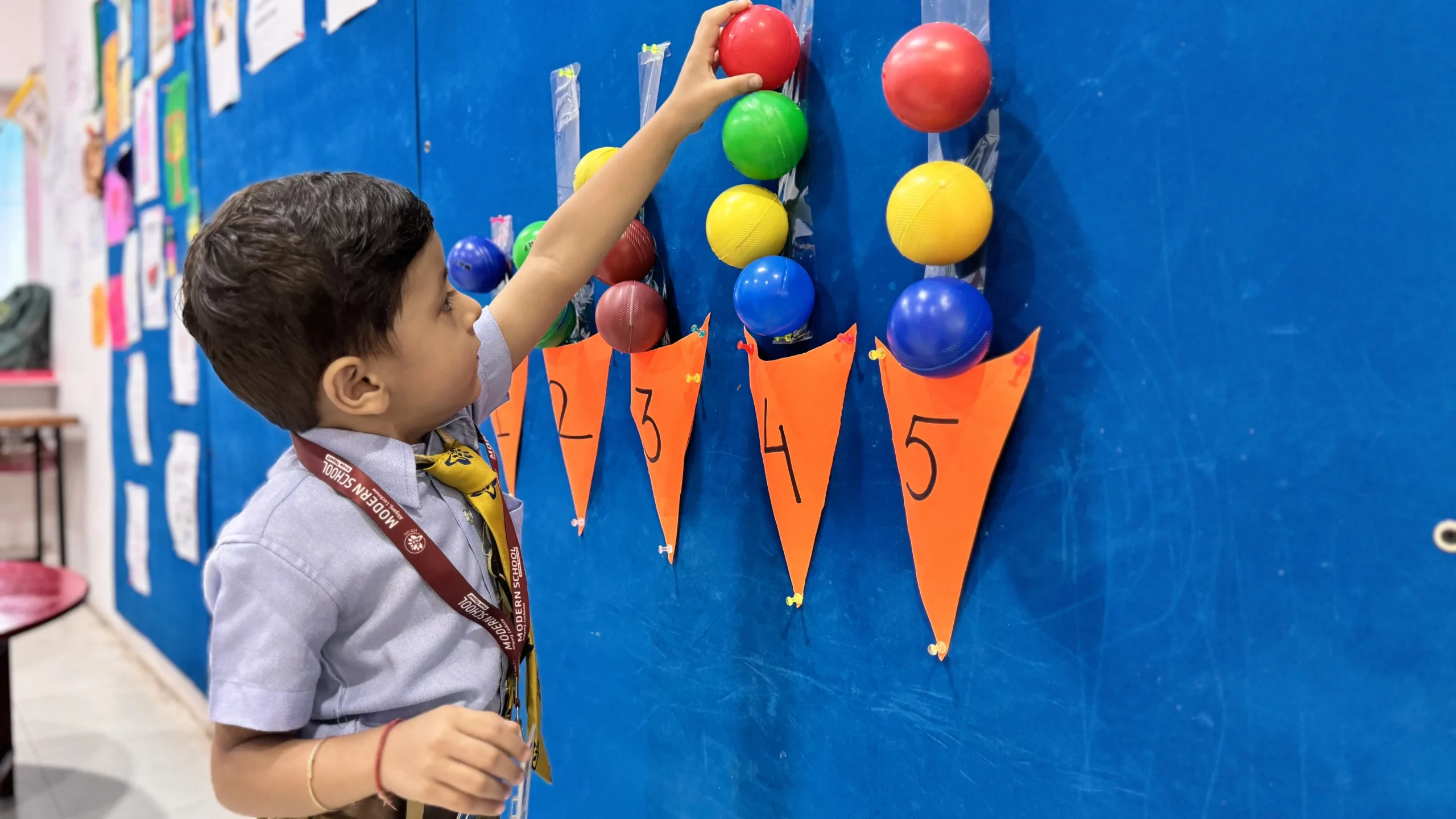
A Play-A-Way, Montessori-inspired curriculum where play leads learning. Sensory play and practical life activities build independence, emotional balance, and learning readiness.
Student–teacher ratio: 10:1
Grades Nursery to UKG
Modern Early Years –
Laying the foundation for joyful learning and discovery through play.
Student–teacher ratio: 25:1
Grades 1 to 5
Primary Years –
International Baccalaureate (IB) Primary Years Programme – fostering creativity, critical thinking, and a global perspective.
Student–teacher ratio: 25:1
Grades 6 to 8
Bridging Years –
A unique curriculum blending the inquiry-based learning of IB and the academic rigour of ICSE, enriched with NEP 2020 guidelines.
Student–teacher ratio: 30:1
Senior Years – ICSE and ISC –
Academic excellence and preparation for the world beyond school.
Student–teacher ratio: 30:1
INTERNATIONAL BACCAULARATE
The IB founded in 1968 at Geneva, Switzerland, is the world’s best school curriculum preparing children for the 21st century.
Only schools which maintain the highest of standards prescribed by IB, and are evaluated regularly, become IB World Schools. There are more than 5000 IB World Schools worldwide. that includes 130+ of the most renowned schools of India.
Modernite parents share why they love IB
Modern School, Lucknow offers an integrated curriculum from Nursery to Grade 12, combining the International Baccalaureate Primary Years Programme (IB PYP) with the CISCE-affiliated ICSE and ISC programmes.
The school is:
- An IB World School authorized to offer the Primary Years Programme (PYP)
- Affiliated to the Council for the Indian School Certificate Examinations (CISCE) for ICSE and ISC
Curriculum Continuum
Nursery – Grade 5
International Baccalaureate – Primary Years Programme (PYP)
Grade 6 – Grade 10
CISCE – Indian Certificate of Secondary Education (ICSE)
Grade 11 – Grade 12
CISCE – Indian School Certificate (ISC)
Curriculum Continuum
(Nursery – Grade 5)
The IB Primary Years Programme (PYP) is a curriculum framework designed for students aged 3 to 12 years. It focuses on the development of the whole child as an inquirer, both within and beyond the classroom.
Key Characteristics of the PYP
- Inquiry-based learning
- Concept-driven curriculum
- Transdisciplinary approach
- Student agency
- Action and reflection
Learning is organized through six transdisciplinary themes, which guide the development of Units of Inquiry. These units integrate knowledge, skills, and concepts across subject areas.
The PYP places strong emphasis on
- Approaches to Learning (ATL) skills
- Development of the IB Learner Profile
- Ongoing formative assessment
- Student reflection and self-assessment
Transition from PYP to ICSE
The transition from IB PYP (Grade 5) to the ICSE curriculum (Grade 6) is structured to support students as they move from a transdisciplinary programme to a subject-based curriculum.
Skills developed through the PYP—such as inquiry, research, communication, and self-management—provide a strong foundation for the academic expectations of the ICSE programme.
CISCE Curriculum (ICSE & ISC)
(Grades 6 – 12)
From Grade 6 onwards, Modern School follows the curriculum prescribed by the Council for the Indian School Certificate Examinations (CISCE). This includes the Indian Certificate of Secondary Education (ICSE) programme at the secondary level and the Indian School Certificate (ISC) programme at the senior secondary level.
The CISCE curriculum emphasizes conceptual clarity, analytical thinking, effective communication, and academic depth, supporting students as they progress from middle school to senior secondary education.
Programme Structure and Focus
- Concept-based teaching and application of knowledge
- Internal assessments, project work, and practical learning
- Progressive academic rigor from Grades 6 to 12
- Development of research, writing, and independent learning skills
Students are prepared for
- The ICSE Board Examination at Grade 10
- The ISC Board Examination at Grade 12
Both examinations are conducted by CISCE, in accordance with its assessment and evaluation guidelines.